
My Book Collection
Peter’s books cover a variety of subjects – coast, islands, walking, railways, travel & football.

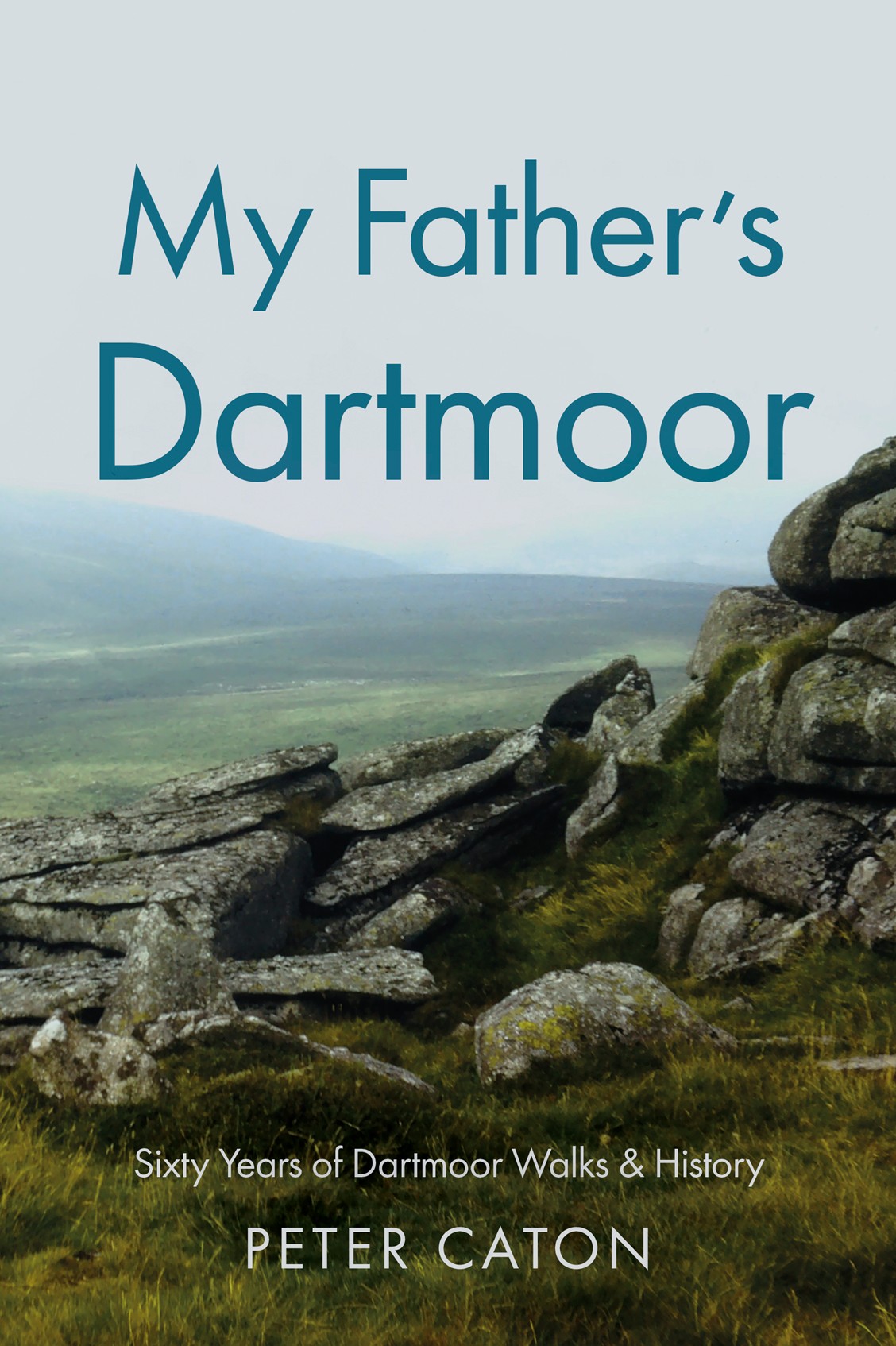
My Father’s Dartmoor
Available to buy today from the link below:
My Father’s Dartmoor ** Coming soon** | Swanbooks
A celebration of my father’s sixty years of Dartmoor walking and campaigning, adding a little to the historical record of the National Park and completing the book that he was unable to finish. Produced in full colour and illustrated with over 200 Dartmoor photographs.
Part One starts with five chapters written by my father describing walks in the 1950s & 60s. Further chapters describe some of his walks in all weathers, with members of the family, and with the Dartmoor Preservation Association.
Part Two contains photographs going back to 1954, some of which are compared with recent pictures. One chapter shows photographs from Dartmoor railways taken in the 1950s, including the famous Princetown branch line.
Part Three is based around my father’s Dartmoor documents, including letters from Hansford Worth and Hemery, and is supported by investigations into some of the buildings and artefacts mentioned. Based on his 1958 photograph, the history of a remote Dartmoor farmhouse is researched, questioning previously published information.
The final chapter looks at changes observed on Dartmoor in the last sixty years.
Full information for each book can be found on the top drop down menu
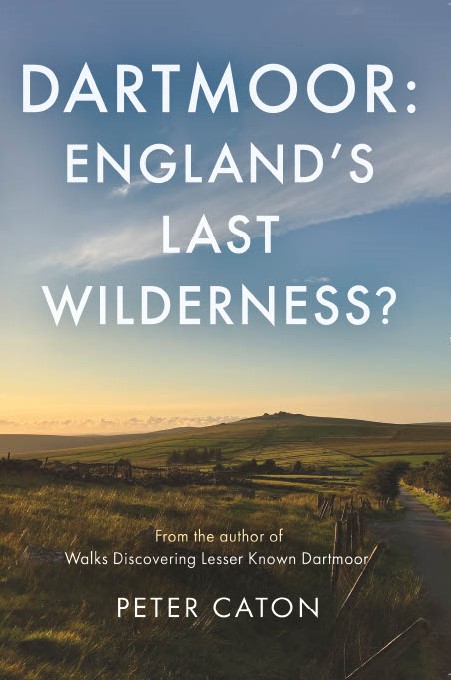
Dartmoor : England’s Last Wilderness?
A Dartmoor narrative, exploring many aspects of the moor by means of a series of varied walks and asking the question, is Dartmoor England’s last wilderness?
The author starts by telling us of the various mishaps he’s experienced on Dartmoor and the lessons learned. He moves on to describing walks, each with a theme and including information on the history, legends, geography and people of the moor. Making use of his father’s sixty-year-old notebooks, he refers back to some of his childhood walks in the 1960s & 70s.
Some of the many controversies and conflicts relating to Dartmoor are discussed, including access, camping and rewilding and the book includes four chapters on battles to save the moor. The author considers what defines a wilderness, whether Dartmoor qualifies and if so is it England’s last.
Illustrated with 100 colour and monochrome photos, the book could perhaps be described as a Dartmoor miscellany with themes of walks, wilderness, controversies and stories of the moor.
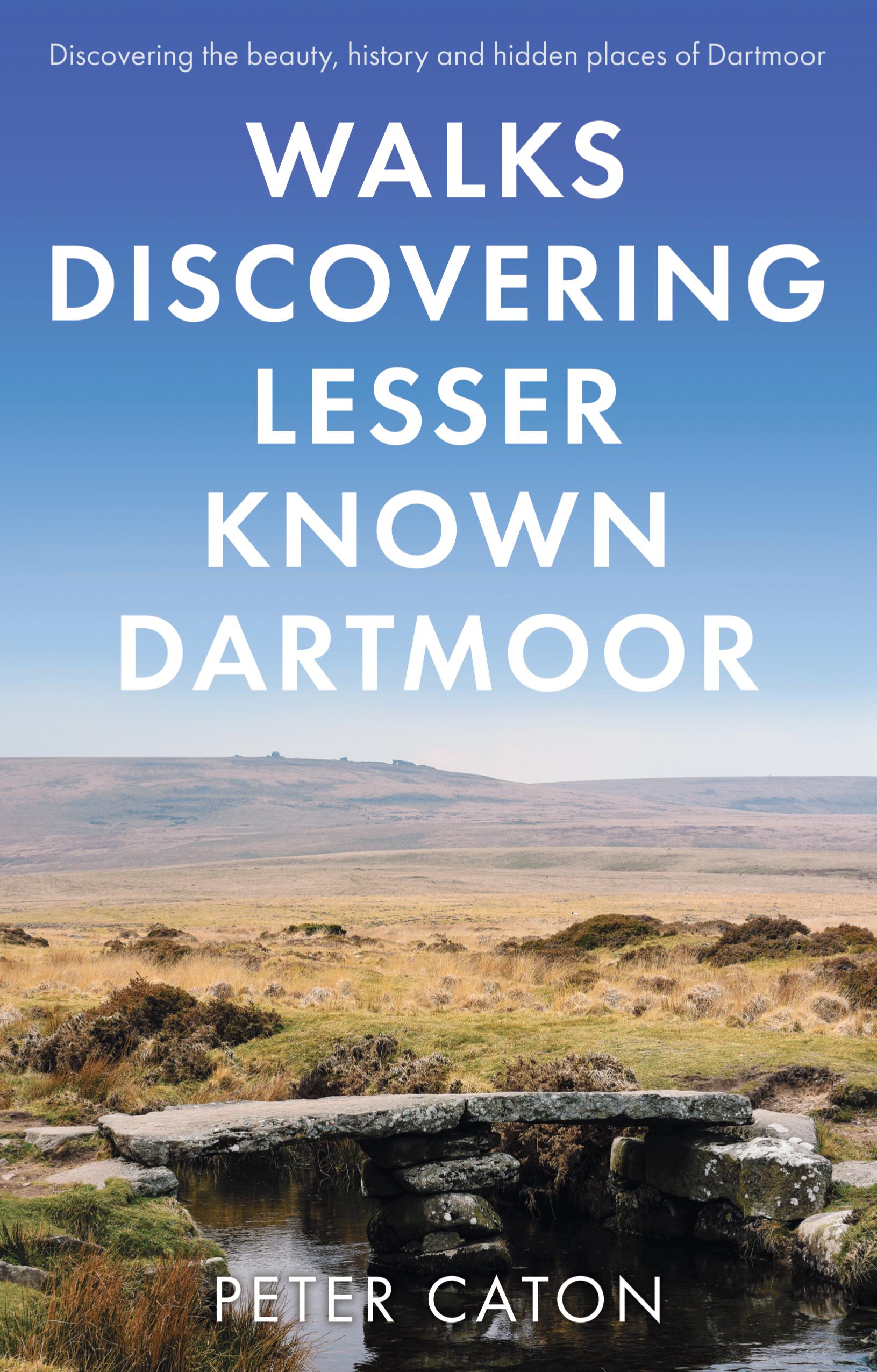
Walks Discovering Lesser Known Dartmoor
Publication date is 28th July 2022.
A guide describing routes of 1½ to 10 miles, enabling walkers to discover the beauty, history and hidden places of Dartmoor, the wildest, most remote and arguably the most beautiful area in Southern England.
The walks will take you to antiquities dating from the Bronze Age and even earlier, to hidden waterfalls and gorges, abandoned remote dwellings, fascinating industrial archaeology, majestic tors and wonderful viewpoints.
For those who don’t know Dartmoor they provide routes for interesting walks of varying length and difficulty. Whilst some of the points of interest will be familiar to those who know the moor well, the walks will take you to places that very few people visit, passing little known artefacts with something new for almost everyone.
Produced in full colour with routes clearly marked on OS maps, the book includes comprehensive background information on the moor and the history, stories and legends of the many places visited on each walk.
An author of walking and travel books, Peter Caton has walked on Dartmoor for more than 50 years.
Remote Stations
Journeys to forty of Britain’s loneliest railway stations.
Written for the railway enthusiast but also for anyone who enjoys travel books. Illustrated with more than 175 colour and black & white photos, both recent and historical.
Combining a love of remote places and of travelling on our more interesting trains, Peter Caton visits forty of Britain’s most lonely railway stations. His travels take him to all four corners of the country; to the top of a snowy mountain, to moors, hills and marshes, and even a mile out to sea, as he rides on some of our most scenic railway lines. Along the way he unearths stories of some bizarre accidents, tales of human endeavour and railway history. He finds a station that closed before it officially existed, wonders why some survived, laments others that should never have been lost and on finding that one of his forty stations is proposed for closure joins the battle to try to save it.
Peter enjoys walks along deserted coast and countryside and discovers five stations that closed long ago. His choice covers a wide variety of stations including a few on resurrected narrow gauge railways. Some are well known, others obscure. He often writes that the train stopped ‘just for me’ and the station ‘serves nowhere at all’.


50 Walks on the Essex Coast
A walking guide describing 50 walks along the Essex coast, the longest coastline of any English county.
Peter Caton discovered the wonderful Essex coastline as he narrated his journey along its whole length, writing Essex Coast Walk (Matador, 2009). He now describes walks covering the entire publicly accessible coast, helping others to follow in his footsteps. Detailed route instructions are provided, along with high-quality maps, while background information and colour photos add context and interest.
Following rivers, creeks and open sea, on paths, tracks and promenades, often with circuits completed across countryside, the walking and views are varied. There is much history and wildlife to be seen as the walker discovers picturesque villages, smugglers’ haunts, nature reserves and little-known gems along the coast. Walks range from 2 to 15 miles, with most having different length options, plus the possibility of linking adjoining routes. Produced in full colour, 50 Walks on the Essex Coast is an invitation for serious ramblers, or those looking for just an afternoon stroll, to discover the hidden magic of the Essex coast.
Suffolk Coast Walk
Combining travel writing with a walking guide, Suffolk Coast Walk provides a wonderful insight into this fascinating county and is the companion book to Essex Coast Walk by the same author.
Peter Caton explores all 162 miles of Suffolk’s unique coastline, describing the route for fellow walkers, with an engaging narrative that tells of the beauty, history and wildlife of this mysterious and varied coast.
The reader is taken up and down Suffolk’s remote creeks and rivers, past sandy beaches and huge expanses of shingle, through nature reserves, seaside resorts and tiny villages. We learn of the county’s abundant wildlife, not just through its famous bird populations but also of equally interesting and less celebrated creatures, and how habitats are managed to balance the needs of nature and mankind.


The Next Station Stop
Join Peter Caton on his 10,000 mile tour of Britain, discovering what it’s like to travel on our modern railways and contemplating train journeys made over the last fifty years.
Inspired by finding a childhood notebook, Peter revisits the locations of family holidays, looking at how the journeys and places have changed, and wondering why his parents chose such unlikely destinations. His travels take him to some of the most beautiful and remote parts of the country and on trains so eccentric that sometimes he wonders if Thomas the Tank Engine is round the corner. Sampling a selection of Inter City routes, he questions whether the pursuit of speed and efficiency has taken away some of the enjoyment of travelling by train, but on sleepers to Cornwall and Scotland finds the romance of rail travel is still alive.
Stand Up, Sit Down
For a hundred years most supporters watched football from terraces, a culture that was an integral part of the game. By the 1980s though, neglected stadia, hooliganism and a lack of concern for safety meant that football had to change, and after 96 Liverpool fans tragically died at Hillsborough, Lord Taylor’s report recommended that our grounds should be all-seated. Many people however believe that something of the soul has been taken away from watching football and that standing is the natural way to feel part of the game.


No Boat Required
When is an island not an island? Peter Caton takes us to all four corners of England, Scotland and Wales to find out.
Sharing our nation’s fascination with islands, Peter sets out to be the first person to visit all 43 tidal islands which can be walked to from the UK mainland. Along the way he faces many challenges: precipitous cliffs, vicious dogs, disappearing footpaths, lost bus drivers, fast tides, quicksand and enormous quantities of mud, but also experiences wonderfully scenic journeys by road, rail and on foot. He contrasts the friendly welcome from most islanders and owners with the reluctance of others to permit visits, and tells how he was thrown off one secret island.
Essex Coast Walk
When Peter Caton set out to walk the Essex coast he had no idea of the beauty, wildlife and stories that he would find on the way. He takes the reader up and down the many creeks and estuaries of the longest coastline of any English county, through nature reserves, seaside resorts, unspoilt villages, sailing centres and alongside industry past and present. On the way we read of tales of witchcraft, ghosts, smuggling, bigamy and incest. We learn of the county’s varied history – of battles with Vikings, invading Romans bringing elephants, a fort where the only casualty occurred during a cricket match, burning Zeppelins and Jack the Ripper.
The book is illustrated with photographs and maps, and the narrative contains a wealth of information, including many little-known facts and stories. With gentle humour to match the coastline’s gentle beauty, the book makes for easy reading. It tells of the solitude of some of the most remote coastal areas in England and of the huge range of wildlife to be found there. In contrast we read of the docks and industry of the Thames, but find that even here there is beauty for those willing to look.
The book highlights how climate change may alter our coast and looks at new methods of coping with rising sea levels. It tells us how tiny settlements grew into large holiday resorts and how other villages have remained as unspoilt and isolated communities. The author’s thought-provoking final reflections consider how the coast has changed over the centuries and what its future may be.
